
Poetry is foracademicsEnglish majorscollege studentsother poetsother writerspeople in coffee shopspeople with degreesliterary criticspeople who know all the rules
Poetry is for everyone.
Poetry for you.
A Carpenter’s Songs and Other Working Poetry takes you into the beautiful, sometimes forbidden world of construction: the tools, the humor, the work, and the men who build the places where we live. Across a carpenter’s life, the poems follow apprenticeship, love, marriage, fatherhood, divorce, and loss. They explore the war between father and son, the frailty men often hide beneath their strength, and how what we build also builds us—sometimes breaking us, sometimes remaking us.
we do
who build
we live
that last


New to poetry?
Get this book. Pick a poem and read it aloud to someone you love.
I hope the worlds of poetry and of being—and becoming—a carpenter open up for you.
Photographs and drawings.


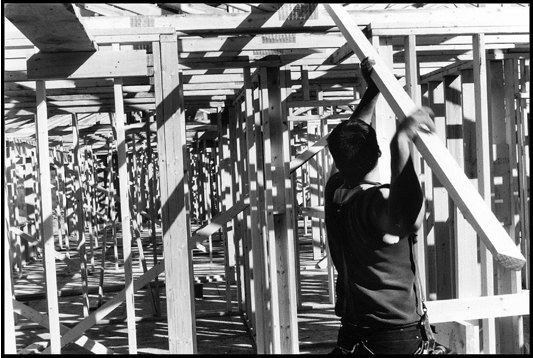
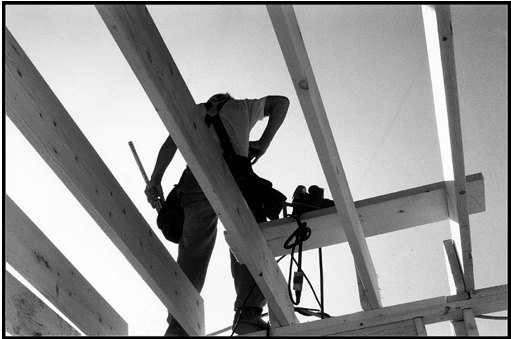
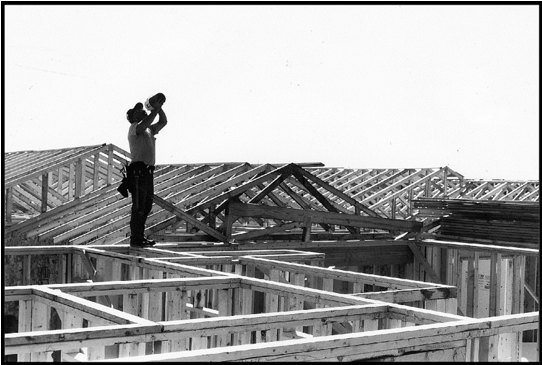
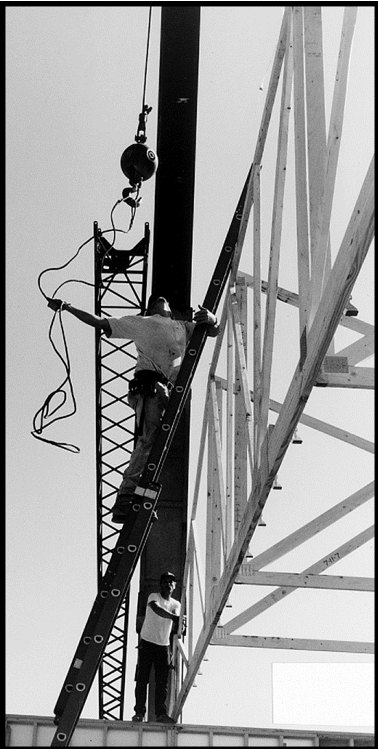
Photographs and charcoal drawings from A Carpenter’s Songs and Around The Country And Into The Animal.
Read the poetry.
The opening poem from A Carpenter’s Songs, with the charcoal drawing beside it.
Framing Hammer
Read
The Problem with Water
Read
Other writing.
Articles and essays by Daniel Greene Smith.
I Confess - Isthmus Cover Story, July 21, 2000
Read
Whose fault is it that a crack dealer ended up dead? In part, it's all of ours.
I remember saying, more than once, "Someone is going to get killed unless something is done." And then, one day, someone was. On March 2, 1998, Nathan P. Turner, known on the street as "P," was shot to death. The trigger man was never found, but I know who killed him: The town of Madison, the city of Madison, and even me. I helped. This is my confession.
I met P two nights before, when he was standing in the parking lot of the town of Madison apartment complex I managed, at the corner of Castille and Granada. The property was called Sundance, and P was dealing rock cocaine.
This is how it works: The dealer stands on private property in a high-traffic location. A car stops, the dealer gets in and does the deal. No money or drugs are seen changing hands, and you can't get arrested for getting in and out of a car. Just about the only way police can get you is if you sell to an undercover.
In this instance, as in others, I didn't call police. Instead, I put on my coat, went outside and asked P to please deal somewhere else. Two days later his body showed up dumped on the side of the road in Cottage Grove.
The word on the street was that P sold $1,500 of fake rock cocaine to the wrong person. If you break up certain vitamins, it looks like rock, but of course you can't get buzzed by smoking vitamins. Whoever bought the fake rock evidently loaded him in the car, shot him, and dumped his body.
In the next six months, two more people were killed 100 yards from my front door. And, despite evidence of improvement, the problem persists: Last week in Madison there were two shootings, both possibly tied to drug activity. Why do such things happen? And what responsibility do each of us bear?
A NEIGHBORHOOD IN CRISIS
The story of P's death begins many years before with Charles Dykstra, the former owner of numerous housing units in the Castille area, including Sundance. Dykstra financed and refinanced the property until he owed money to 11 banks. He kept asking for money and the banks kept giving it to him.
The problem was that all of this borrowing created a cash void. The properties owned by Dykstra needed cash so badly just to stay afloat that they were taking any and all applicants. While Sundance was taking anybody, Sommerset and Allied were kicking out their problem residents. The word got out you could get a place at Sundance without a background check. Soon problem residents began to showing up at 101 Castille.
I started as the property manager of Sundance in June 1997. The 104 units I was in charge of had gone bankrupt and were less than 60% rented. The company I worked for had been called in to turn it around and get it rented. That was a lot easier said than done.
Shortly after I started, I called the other owners of the 546 apartment units in the area, some of which were also on the verge of going bankrupt. They were all having trouble finding tenants, and the problem that everybody pointed to was crime.
In September, I went to the town of Madison Police Department and looked at the crime statistics for our neighborhood. That month alone, there were more than 300 police contacts for a neighborhood of 546 apartments, only 340 of which were occupied. That's about one police contact per occupied apartment.
In shock I talked to another area landlord about it. She read to me a letter that was left from a vacated apartment. The letter bragged about "slinging rock" in the neighborhood and referred to the town of Madison as the "Land of the Free."
"What does that mean?" I asked her.
"There's only two police officers on duty at any one time in the town of Madison," she told me. "The crack dealers don't think they can ever get caught."
"What!? Two police officers for the whole town of Madison, to cover here and the Beltline and up on the North Side?"
"Yup."
"No wonder."
Our neighborhood alone could have kept two neighborhood officers busy full time.
Within a month of moving on site in September 1997, I knew that I had between 10 and 15 apartments where crack was being used or sold. I approached town administrators and asked for more law enforcement. This is what they told me.
Mike Thiesen, the chairman of the town board, said to me, "If you wouldn't rent to these people we wouldn't have to worry about arresting them." Of course I hadn't rented to "these people"; I came in the game at fourth down and twenty, after "these people" were already there. And besides, a lot of "these people" were good people.
I showed Thiesen and chief of Police, Kevin Lindsey, the crime statistics I'd gathered. The crime rate for our little neighborhood was around 20 times higher per capita than the city. I finally asked, "What's the problem here?" The problem was the town couldn't afford to hire more police. A cop costs between 50 and 60 k a year, and the town's tax base couldn't support it. One town official told me, off the record, that the best thing that could happen to the town would be if it were annexed by the city.
Because there weren't enough cops, I tried another approach: convincing crack dealers that they really ought to do something else. Instead, it was they who set me straight.
CAREER CHOICE
The dealers I met were all men, and mostly black men. There were some Hispanic and white men in the business, but for the most part the dealers I met were black men, between 13 and 30 years old.
They told me they could buy cocaine in Chicago or Milwaukee for $5 to $10 per rock, and sell it in the town of Madison for $10 to $20. "I can turn $200 into $400," one man told me. "What do you want me to do? Work at Wendy's for $8 an hour? You want me to get a GED and sling burgers for the man? Come off it."
Whenever I explained job options besides crack dealing, the dealers would show me a few things. Like a tightly wrapped roll of tax free twenty dollar bills. Or a gun, a symbol of status within their community. Or they'd gesture to their car, and say something like, "I got what you got and then some."
It's strange. In all our discussions about drug dealing and drug-related violence, seldom do we acknowledge the simple truth: Many people get into crack dealing because at the time it seems like their best career choice.
I talked to the dealers about getting shot, going to jail or prison, and poisoning your body. None of it made a dent. Half the guys thought they were going to get shot or go to jail no matter what they did as black men, so what the hell. The way they saw it, they might as well go into business for themselves, be entrepreneurs. That way if they did get shot or go to jail, at least they'd have more fun while they were around.
One dealer who lived across the street from me put it like this: "All that community action bullshit is just to make it so I can work for the man for the next 40 years and die poor anyway. I'd rather do it my way. I don't want any white guy to make a dime off my ass. Fuck them."
Crack dealing wasn't just a business, it was a rebellion against the Man. It was the invention of another economy. In their minds, there were two America's, two economies, two countries. Living and dying in their America was far better than living and dying in ours. In our America, they were convinced, they'd play by the rules and get nowhere.
But as I dug deeper into problem, I discovered it wasn't just the dealers who divided our country into two Americas. It was also us, that "us" had created the "them" of crack dealing. We had invented the two Americas.
How come there are poor neighborhoods and rich neighborhoods? Are people voluntarily segregating themselves by race and class? Not at all. It's policy, and it's not the poor who are making it.
BECOMING A 'HOOD'
Section 8 is a program for the poorest people in the United States. If you qualify for Section 8, you live below the poverty level, and Uncle Sam will pay your rent with certain stipulations. If you're on Section 8 and you have no income, the government pays all your rent. If you make anything more than $0, the government pays less of your rent.
We live in a capitalist society, where more money is better. Therefore, if I'm in Uncle Sam's Section 8 program, the smartest thing I can do is not get an official job so the government will pay all my rent, and then find an off-the-books source of income. Crack dealing and the crack economy are the perfect solution.
In Madison, Section 8 residents are localized to specific properties. Some people in the city have been trying to mandate that everyone has some Section 8 units, but so far those attempts have been unsuccessful. So here in Madison the poorest people live in the same places. That place was my neighborhood.
The town and the city could mandate that for every 100 apartments owned or managed, you have to have four apartments that are Section 8. In that way, the poor people would be spread out, and the drug culture and economy—the cancer of the second America—wouldn't be so focused.
But it's town and city policy to allow landlords/owners to either take section 8 or leave it to someone else. What happens as a result is Castille Village, which was right down the street from my property. Castille had and still has 54 Section 8 apartments in the same area.
It doesn't take a rocket scientist to figure out that if you localize/isolate 54 Section 8 apartments, you're creating an environment that will breed crime and become a 'hood.
With these policies of putting all the poorest people in our city in the same place, the city and the town and the federal government are knowingly creating a crime district. But it's not just the city and the town. It's us that don't want to live or deal with them.
One night I was getting hammered at a local bar complaining about the situation. Some guy who said he lived in the Shorewood put it all very simply: "Who cares if crack dealers are shooting each other ten or twenty miles from my garage? As long as they don't live near me, let them kill each other."
KICKING THE BALL
I believe in our rights to not be searched without reasonable cause or suspicion. I believe more in our right not live in fear, and I was living in fear. There were gunshots every other night. My residents told me stories about how when they heard gunshots they hit the floor to avoid stray bullets and of not inviting their grandchildren over to their homes because of the neighborhood violence.
All of my residents and most of the people in my neighborhood were working poor. Black, Hispanic, white and Native American people, with jobs and integrity and families, but not a lot of money. They didn't want to live in fear but they didn't have the means to leave the neighborhood.
When the city of Madison proposed its controversial loitering ordinance, I went to the meeting in support. Even though the measure would not apply within the town of Madison, I thought it made sense, and would help other areas address problems of the sort that I had seen.
The meeting I walked into was a rude awakening. The people who attended, mostly in opposition, didn't live in my neighborhood, and they kicked the intellectual ball about rights and freedom to each other like kids standing in a circle with a soccer ball. Get the ball, play with the ball, pass it to your friend. They talked about the constitution and due process, not about fear and death.
At the meeting, I made two simple statements: "I'd rather be unconstitutionally searched than unconstitutionally shot," and "We keep trying to get the crack dealers in our neighborhood to wear blaze orange vests that say CRACK DEALER on them, but for some reason they don't want to cooperate."
The response from the group was shaming silence, as if I had just dropped a plate in an expensive restaurant. The debate went on without me.
In their world, the anti-loitering ordinance violated the great intentions of our written creed. In my world, the ordinance was a tool that could help make it so my tenants and I didn't have to worry about stray bullets.
Back at Sundance, I tried another angle. The town or city can seize a property that's being mismanaged and has clear drug trafficking in it, in what's known as "Drug Abatement."
There were several owners who hadn't evicted drug-dealing tenants, or whose parking lots continued to be places for crack deals. I'd confronted the owner and manager of the worst property, and he didn't really care so long as the rent was paid. So I gathered statistics on the property in question. It was a 16-unit, and every month for six months it had the highest number of police calls per unit in the entire neighborhood.
I forwarded this information to the town, asking that it pursue drug abatement. The town responded that drug abatement was "hard to do." I called the Dane County Narcotics Task Force. They couldn't help right away, but maybe later on. I called the chief of police in Madison and he wouldn't take the call, so I called the mayor's office and got an appointment.
Thiesen, the town chairman, asked me not to go to the mayor. He referred to the town of Madison's crime problem as an "in-house" problem. He promised he'd try to help--if I cancelled the meeting. So I cancelled the meeting.
The chairman came to my office at the corner of Castille and Granada. We stood at the picture window and watched some crack deals. He turned to me and said, "You're right. You do need some help down here." He said he would talk to the sheriff to try to get some extra coverage. No help came.
Frustrated, I talked to some police officers in the city about annexing the town. They didn't think it was a good idea. "Why would the city want to deal with this?" one officer told me. "You'd have to hire more police and it would cost money. How would the city pay for it?"
Another Madison police officer told me, "You know, you'll never change this neighborhood." I responded: "Either you have the wrong job, or I do."
'IT'S ALL GOOD'
On Feb. 28, 1998, a Saturday, I came home to my apartment and surveyed the parking lot. One crack dealer. I put on my coat and went outside.
"You need anything?" he asked.
"No, I'm the landlord," I said. "I'm pretty sure you don't want to hit with trespassing or searched." We smiled at each other knowingly.
"You got that right," he said.
I asked him his name: "People call me P," he said. We shook hands.
"Well P, you can go across the street, but not in my lot, OK? and be careful."
"Cool, it's all good. Thanks for the heads up."
"No problem."
I'd sent him over to the parking lot where most of the dealers hung out. Two days later, at 8:57 am Monday, March 2, 1998, they found P's body dumped on the side of the road in Cottage Grove.
For the next three weeks, we had sheriffs and task force officers, wall-to-wall law enforcement. That month, there were probably close to 60 arrests in my neighborhood. But it wasn't over. There were two more drug-related murders, one stabbing and one shooting. (It was a security guard, not the police, who arrested the shooter.) Somehow, while the murders were news, the magnitude of the problem was never really discussed.
I remember P's face, his smile. I remember him telling me, "It's all good." I've thought about him a lot over the last two years.
Looking back on it now, I think just about everybody--the banks, the town, the city, me--bear some responsibility. No one seemed to step up to the plate and get it done. Someone had to get killed to put things in motion.
And even then, the owners and managers didn't solve the problem in the Castille. We moved it. I evicted about 50 units, and a few of my colleagues did the same. Over eight months, the crime rate dropped sharply. But I doubt we really did anything to address the real problem.
Today, the neighborhood at Castille and Granada has come a long way. There is a small community center run by Joining Forces for Families. The crime rate statistics are way down: There were 69 police calls in the area in June 2000, down from 300 in September 1997. I no longer am the building manager, but people tell me that some of the same owners who were a problem two years ago are still a problem today, and the town is still not holding them accountable.
When will we learn? When will Madison insist that we distribute Section 8 units through out the city? When will the town either seize the properties that are the source of violence or let itself be annexed? More importantly, when will we as Americans start dealing with the problem and stop evicting it, arresting it and moving it? When will this country become one America, truly indivisible. I hope my confession is a small motion in that direction.
Daniel Greene Smith, a native of Michigan, has lived in the Madison area for ten years. In 1995, he won the Felix Pollak Award for poetry from the UW-Madison. He currently works as a writer and photographer.
Crack, Black, Busted
Read
Cover: Is the war on drugs working? If its goal is to lock up African Americans, the answer is yes. Just ask Freddy Doyle.
Inside: The war on drugs is really a war on people like Freddy Doyle. Is it just punishment for crime, or an example of skewed priorities?
There are five doors, several tons of steel and many preconceived notions that separate Freddy "Diamond" Doyle and me as I arrive to interview him this summer at the Dane County Jail. The 22-year-old native of Michigan City, Indiana, was convicted of crack dealing for the second time and is awaiting transfer to prison, to begin serving a four-year term.
Doyle, to my surprise, is soft spoken and polite and has a baby face--such a baby face that the day before he was arrested, he says, a clerk refused to sell him cigarettes because she didn't believe he was old enough. By that time in his life, Doyle had been shot twice, and had lost five or six of his friends to shootings and crack wars.
"I'm not a bad person," he assures me. "I've never really done anything bad to a person physically or bodily. I never harmed a person. I just felt like I wanted the things that I seen a lot of people with like the fancy cars and all of that."
Instead, Doyle ended up behind bars. (The day after our interview, he was transferred to Dodge Correctional Institute, awaiting further placement within the state prison system.) Depending on your point of view, he's either another statistic in the fight against crime or another casualty of the war on drugs. What's certain is that he'll be locked up, at taxpayer expense, for some time to come.
It should come as no surprise that Freddy Doyle is a black man. In the minds of many Americans, the words "crack" and "black" go together. Nationwide as well as statewide, the words black and prison go together too. Black people constitute only 13.8% of the U.S. population but 50.4% of its prisoners.
Wisconsin incarcerates black people at a rate nearly double that of the nation as a whole. Blacks here account for just 6.6% of the population and 47.4% of those imprisoned by the state Department of Corrections. According to the Sentencing Project, a Washington D.C.-based organization, African Americans have a better chance of ending up in prison in Wisconsin than almost any other state in the country. Only Minnesota locks up a higher percentage of its black population.
Drug offenses are the main engine driving this disproportionate incarceration of blacks. In Madison, where African Americans account for just 6% of the population, 54% of all the people arrested for drug offenses in 1999 were black, according to records provided by Madison police. And blacks accounted for 80% for the sale and manufacture of opium, cocaine and derivatives in the city last year (see chart). In this category, black people in Madison were 64.5 times more likely to be arrested than whites.
"Dane County has the worst statistics in the state when it comes to racial disparity in drug charges and imprisonments," says Steve Hurley, a longtime Madison criminal defense attorney, drawing from his work on a criminal penalty study committee. "It's shameful."
Currently, there is growing negative attention focused on the war on drugs. Recently, former Madison Police Chief David Couper publicly stated what others have long argued--that this war is unwinnable, and a waste of law enforcement resources. Less often scrutinized is the role that race plays in the waging of this war.
Indeed, some people say this largely explains why this war is still being fought, amid overwhelming evidence that it is not stopping people from using drugs. Perhaps the true goal of this war is to place large numbers of African Americans behind bars, keeping them out of the job market and in many cases taking away their right to vote. If so, it is a huge success.
TARGETED ENFORCEMENT
Although arrest and incarceration rates appear to show that a much high percentage of blacks use drug than whites, statistics on actual drug use contradict this. According to the 1998 Federal Household Survey, "most current illicit drug users"--72% in fact--are white. African Americans, the survey says, constitute just 15% of total users.
The reason for this disparity, says Hurley, is that "we target poor people and black people for arrest." Why? "It's easier to catch poor people. It's harder to catch people buying or selling drugs in a country club. If you concentrate your police force on one group, you'll get arrest records and convictions that reflect the concentration on that group."
In Madison, programs like Blue Blanket have long focused law enforcement on "challenged" neighborhoods--those with lots of poor people and blacks. The arrest that sent Freddy Doyle to prison occurred in May 1999, in Penn Park in south Madison. Police had the park under surveillance as Doyle placed a package into a garbage can. The package was retrieved by police and determined to contain $1,000 worth of crack cocaine.
Hurley thinks there are political reasons that enforcement efforts are focused on blacks: "You pick on a population that historically does not exercise its franchise, or that is so small that even if it exercises its franchise it doesn't truly make a difference in the election of an official. They have little voice." In contrast, he asks, "What do elected officials have to gain from arresting white people?"
Indeed, says Hurley, one reason there hasn't been more outcry over the war on drugs from the predominantly white public is that "It ain't their kids being arrested. It's somebody else's [black people's] kids being arrested."
Enis T. Ragland, a black man and chief of staff to Mayor Sue Bauman, has a different perspective.
"The police are in black neighborhoods to protect us from each other," he says. "They [white people] don't have 50 people running in and out of a house every hour to buy drugs. They're not driving up and down the street with the stereos booming. They're not ripping off their neighbors to feed their habits. Mostly their children are not going unfed. They [white people] aren't shooting each other for the right to sell poison and death to their own communities."
A police officer, who asks that his name and jurisdiction be withheld, agrees. "We're not in the poor neighborhoods because we're worried so much about drugs," he says. "It's the violence that goes along with drugs, and that's usually about the money involved--so and so ripped off so and so. The drugs come with violence, but it's not the drugs were worried about so much, it's the shootings and the violence that goes along with it."
Hurley isn't persuaded. "Why do we primarily attack the drug problem with black folks?" he asks. "There's plenty of white on white crime, there's plenty of white people getting shot, there's plenty of white people using and selling drugs but we don't concentrate our police force in those neighborhoods."
There is, suggests Hurley, something sinister in what has happened to Freddy Doyle and thousands of young black men like him.
"One hundred and forty years ago, we fought a civil war in part over enslaving black people in essence to do certain jobs that were economically unpalatable to free white people," he says. "Now we duplicate some of that experience in a much more sophisticated way. We concentrate a police force in a black neighborhood. We arrest and convict the black people of certain crimes. Once they're convicted of a felony, we have disenfranchised them more effectively than the use of a poll tax.
Convicted felons lose the right to vote, to own firearms, and are put at a permanent disadvantage when it comes to finding jobs. "People who are convicted felons," continues Hurley, "have difficulty getting employment and wind up doing the jobs that more affluent white folks don't want to do."
So it's the reinvention of slavery?
"I'm not calling it that," says Hurley. "What I'm saying is the effects of concentrating a police force in a black neighborhood and then following through with the legal system to get convictions has some of the same effects. We like to gripe about all those black males that don't support their families, and cause their families to be on welfare. But the fact is if you incarcerate 25% of the nation's adult black male population, you have prevented those men from supporting their families and that has it's own consequences."
'CRACK IS MONEY'
Freddie Doyle was raised by his mother; his father moved to New Orleans when he was very young. He described a neighborhood where drugs and gangs were always around, where dealing was normal. He says some of the older kids would beat him if he didn't go to school because "they didn't want me to go through what they went through." But when he was 15, he says an older gang member offered him $2,500 to drop out of school and start dealing rock cocaine. And that's what he did.
Doyle says that for him, crack dealing was a job--and a good one at that. He could make up to $1,000 in three days. He didn't smoke the drug himself because "I seen what it does to people." And he wouldn't sell it to anyone he cared about.
"Every time I'm selling a rock, I don't like doing it," he tells me in a jail conference area. "But they won't give [me] a chance at getting a $11 or $15-an-hour job. I have to do something to maintain. I've been convicted of felony already and they [employers] look at us like we're just nothing, and we're human just like everyone else, anyone that's been to a penitentiary."
After Doyle's first felony, he says he tried to go straight, but became "discouraged" after months of rejections. And so he went back to "the only thing I know"--his profession of seven years, crack dealing.
"Crack cocaine is money," says Doyle. "You can be broke and have nothing but if you got that you got money. And just like money, it's the root of all evil and people need it and people want it, and they'll do what they can to get it."
Doyle says that when he does get out of prison, he's going to keep "pushing and pushing to get a job." But he doesn't give himself good odds. He thinks his past will be held against him.
Later, I ask an employer about Doyle's situation, and he essentially agrees: "I'm not a social service. Hiring a convicted felon is a risk and my competitors aren't taking those kinds of risks. I'm in the business of making money, not social work."
As a crack dealer, Doyle was also motivated by the bottom line. "I was seeing the money," he says, "so that's what I fell off into." He pauses, considers his present surroundings. "Now maybe I should give working at Wendy's a try."
Doyle shakes his head and laughs at his remark. "I tend to do the right things some of the time and the wrong things most of the time," he tells me. "I've been going though this too long now. I'm 22 and I can't take it no more and I'm tired of it. I'm not even from Madison. Now I'm away from my family, and it hurts me."
When I tell Ragland about Doyle's situation, and the justifications he makes, he responds vehemently. Crack dealing, he says, "is a cop out, it's an easy way out. These are people thinking only about themselves. They're not thinking about their families, their children and their communities."
Ragland says that "the gang mentality" doesn't make any sense to him. "Here's a guy who looks just like me--same color, hair style--but he's wearing red and I'm wearing blue so I have to try to kill him. We're both fighting over a corner of concrete that neither one of us own for the right to sell poison and death to our own communities. We should be fighting for the right to buy a house, or the right to get into college, but in our brainwashed mentality is such that instead of fighting for those things we're turning on each other."
LARGER DYNAMIC
According to the state Department of Corrections, it will cost taxpayers $1,716 a month ($20,593 a year) to keep Freddie Doyle in prison. As of July 31, there were 2,562 Wisconsin inmates--12.2% of the state's total adult prison population--serving time for drug offenses. This excludes inmates doing time for drugs in addition to other crimes, like robbery or sexual assault.
In other words, Wisconsin is spending about $52.5 million a year just to lock up nonviolent drug offenders like Doyle.
What if this vast sum were spent instead on things like education and job training and housing and health care. Wouldn't that investment increase the likelihood that poorer minority populations would be able to pursue and get jobs instead of committing felonies? Wouldn't the state be better off decreasing the prison population and increasing the taxpayer population?
"We know we're putting a large amount of our resources [in law enforcement and the penal system] and it isn't working," says Hurley. "Rationality would dictate that you remove the resources from there and put them in another place."
Ragland agrees. "If a job and an education were as easy to get as a rock of crack cocaine and a gun in our poorer neighborhoods," he says, "my people would not be in this position." And he believes there needs to be other approaches besides just locking people up: "People need help. Being addicted to drugs should get you some medical attention, some treatment. Every study supports that treatment and education are the way to handle it, not the penal system."
So what's the problem? "Our elected officials can't seem to get that through their minds yet. The polls say, 'Get tough on crime. They don't say, 'Fix the problem, and save our children and our money.'
But while Ragland agrees there ought to be changes in how mainstream society and the criminal-justice system view drug offenses, he also thinks young black people like Freddy Doyle need to take personal responsibility.
"I'm frustrated with the position majority culture puts us in, but I'm also frustrated with the choices my people make when they're put in those positions," he says. "We [African Americans] have a shorter-term look at things and it pushes us towards immediate gratification. Our rights were 'given to us,' as if they weren't inherently ours for being human beings. In our country, we've only had the right to vote for 35 years. Anything that's given can be taken away.
"While we've been human for as long as white people, white people have only recently begun to recognize that, and they can unrecognize that. Those facts, and our history where we were stripped of our culture and our religion, has brainwashed many of my people as well and pushed some of my people to take risks they shouldn't take."
As Ragland sees it, the drug problem ties into a much larger dynamic. "It's easier to lock up the problem than it is to address the problem, and they see us as a problem," he says, referring to white society. "That's the mentality. They see us black people as a problem and not as part of American society. Once we're seen--or if it ever happens that we're seen--as part of America, that's when things in our country will change."
Toward the end of my interview with Doyle, I ask him if there's anything else he'd like to say. In response, he makes a plea--for his future, and perhaps the future of others in his predicament.
"I made mistakes in my past, but that's in the past." he says. "I hope that when I get out, people will give me a chance, even though I've been to the penitentiary. I just want a chance. I want people to be fair."
1999 Madison Arrests for Drug Offenses
Total arrests 734
African American 396 (54%)
White 334 (45.5%)
Other 4 ( .5%)
For possession (all drugs)
Total 490
African American 223 (45.5%)
White 263 (53.7%)
Other 4 ( .08%)
For sale or manufacturer of opium, cocaine or derivatives
Total 188
African American 151 (80.3%)
White 37 (19.7%)
Source: Madison Police Department. Numbers reflect cases prosecuted under Chapter 961, the state's drug statutes.
Live Through This
Read
Adrian Pope has waged a long and lonely battle against bigotry, isolation and a dreadful disease.
In 1984, Adrian Pope started a group to help victims of a strange new disease. Soon, he became his own client.
As Adrian Pope tells it, "everyone was terrified of Jerry." The doctors, nurses and technicians who entered his room in the intensive care unit of UW Hospital wore masks, gloves and triple layers of protective clothing. Jerry's food trays were destroyed after use. His primary physician would inquire into how he was feeling from the doorway, afraid to even enter. It was 1984.
"Jerry had a disease that killed its victims in about six weeks--that seemed to eat people from the inside out," says Pope, then a monitor technician at the hospital. "No one knew exactly how the disease worked, or how contagious it was. Everyone knew it was fatal and they didn't want to be exposed to it."
Pope got to wondering what it was like for Jerry, being attended to by people in space suits. One day he asked him, "How long has it been since you've seen someone's face?" Jerry, who was connected to a respirator, couldn't speak. Pope took off his masks and his protective gloves. "See, there's a person right here." Pope then held Jerry's hand and reassured him. For the next several hours, as the respirator kept Jerry breathing, Pope and Jerry talked, with Jerry gesturing responses.
Jerry was the third patient Pope met who suffered from this strange disease, which had only recently been named: Acquired Immune Deficiency Syndrome, or AIDS. The other two men were Paul and Mark. Pope saw that it was a terrible disease not just because of what it did to the body, but because of how it made people behave.
Paul's family, for instance, blamed his partner. "Can you imagine living through that?" asks Pope. "I don't think Paul's family even allowed his partner to go to the funeral."
Back then, Pope recalls, "people were talking about the disease being the wrath of God, or somehow thinking that the disease was the fault of gay men. I remember an interview I heard on the radio with a physician who was recommending branding everyone who had AIDS on the forehead, the arm and the rump, as if people with AIDS were infected animals."
It was this stigma, as much as the disease itself, against which Pope rebelled. "I just knew in my gut that this was wrong, this was all wrong," he says. "I didn't see anyone to blame, what I saw was people dying. After seeing Paul and Mark die, I promised myself that I wouldn't let any one else die like they did, isolated like that. Of course I had no idea what it would mean to keep that promise back in 1984."
And so Pope approached his boss at UW Hospital about creating some sort of program for victims of this new disease. She gave him unqualified support. He spoke to Jerry on his hospital bed and asked what he thought about the name Madison AIDS Support Network. Jerry signaled thumbs up. That day MASN had its first volunteer, Adrian Pope, and its first client, Jerry, a man who was dying of AIDS.
Pope describes his typical day back in the '80s, after the founding of MASN. "After an 8-12 hour shift at the hospital, I would go visit patients with AIDS and their loved ones. Sometimes, I would take someone outside so they could sit in the sun. Just sit there and talk. Other times we'd have support meetings.
"The main thing to me," Pope continues, "is that people feel like they're a human being--that they're alive, that they're someone, and that there are people around them who think they're a person."
One day Jerry, no longer bed-ridden, tracked Pope down, ecstatic. "His face was all bruised, and his front two teeth were missing," recalls Pope. "I thought that he had been beaten. Instead Jerry told me how he had been able to get out to the grocery store by himself for the first time in at least six months. He had a coughing fit in the store, blacked out and smacked his face on a shelf, knocking out his two front teeth. But Jerry saw his missing teeth and bruises as a badge of honor: He was not only living, he was alive."
BAD NEWS
Adrian Charles Vincent Pope, whose nickname is "Chaz," was born 45 years ago [BD-2/19] in Arena, Wisconsin. He grew up on his family farm there and thought for many years that he would become a farmer himself. After attending the UW-Madison, he worked as bartender before landing his job at UW Hospital and Clinics. Today, Pope works for OutReach, a local support agency for people who are gay, lesbian, bisexual or transgendered.
As a gay man, Pope has long had to live with bigotry. As a medical technician, he understood better than most people what AIDS was about. But nothing in these experiences prepared him for the journey he was forced to take.
Six months after Pope started MASN, he noticed he had some symptoms himself. He began to believe that he too had AIDS. His doctor didn't think so, and diagnosed him instead with a disease whose name Pope can't remember--"hemo-something," he says, laughing. "There were only 30 other people in the United States with that diagnosis."
Pope asked his doctor to test him for AIDS, but the doctor wouldn't. He went to another doctor, who ordered the tests, saying the results would be back in a week. But while Pope was pretty sure he had AIDS, he wasn't as prepared for the news as he thought.
"The week of waiting and the news was hell. I took my friend Will Handy with me. He took notes from my meeting with the doctor and typed it all up and sent it to me."
Handy had told Pope that he wouldn't be able to remember anything from the meeting. Pope thought he would, but it turned out that Handy was right. "When the time comes you walk in and you sit down and the doctor says, 'I'm sorry, you have AIDS.' Everything blurs."
Pope went home and for several days just stared out of his window and cried. "I was figuring it was going to be six weeks, maybe a year if I was lucky. I didn't figure there was any point to worry about starting a savings account or a life insurance policy. At the time, there was nothing anyone could do."
The irony still amuses Pope, that six months after starting a support group for victims of AIDS and its precursor, HIV, he became his own client: "Isn't there a law against that somewhere?" While Pope jokes about it now, back when he was first diagnosed he expected that he would be dead within the year. Yet 16 years later, Pope is living well.
Pope credits Dr. Dennis Maki, the UW's head of infectious diseases, for saving his life: "If it wasn't for him I wouldn't be around." And Pope goes on to describe some of what he's been through.
In 1984, there weren't a lot of medical treatments. Some thought that removing the spleen slowed the disease; others didn't. Pope researched the matter and talked it over with Dr. Maki. They agreed it would be best to have the surgery.
Then, in 1985, the AIDS virus somehow crossed the barrier between the blood and the spinal fluid, and Pope says Maki told him, "It's time to get your house in order. I don't think there's anything we can do." But neither Pope nor Maki gave up, and Maki got him into a research program that was testing AZT on people who were terminal.
"The drug," Pope recalls, "was incredibly toxic. I was nauseous all the time." Pope now takes what's referred to as "the cocktail"--a combination of three drugs that has proved to be effective in helping people survive with the disease.
There were two other close calls, where Dr. Maki told Pope to prepare for the possibility that his death was imminent. But Pope survived--in large part, he thinks, because of his attitude.
"If I became bitter or self-pitying I doubt I'd be alive," he says. "I try to keep stress out of my head. If I let the little shit bother me it will kill me. I've lived with the meanest virus we've seen in decades. What can anyone do to me? What could happen during the day that would be so important that I would allow it to stress me out?"
Despite the progress in treating AIDS and HIV, Pope thinks the underlying issues--the bigotry and rejection--have not changed enough.
"People don't realize that no one wakes up in the morning and says, 'Gosh I think I'll become gay.' It's difficult to be gay, people shun you, hate you, stay away from you. No one chooses it. It's something that you're born with that you accept, not something you decide." No one chooses to have AIDS, either, but "somehow gay men were blamed for the disease and sometimes still are."
Pope recalls one famous case involving a young boy who contracted AIDS from a blood transfusion. "When Ryan White died from AIDS in 1990, the whole nation seemed to mourn. They should, it's horrible. But why is his life more valuable to the nation than the thousands of people who've died of AIDS? Because many of the people were gay, somehow their lives were seen as being not worth as much."
FOCUS ON LIVING
From its modest beginnings in 1984, MASN (now simply called AIDS Network) has become a nonprofit corporation with an annual budget of $1.6 million, 26 employees, 120 volunteers and an annual caseload of 350 clients. The group now serves 13 counties, and the services it provides have changed. (Another group, the AIDS Resource Center of Wisconsin, covers the rest of the state and has recently set up operations in Madison.)
"Now our focus is more on living," says AIDS Network representative Susan Gillingham. "There are a lot more treatments now, and people can live with AIDS and manage it, although it's very challenging, I can't imagine what [Pope] had to go through when there wasn't the hope that there is today. Today people can live with the illness."
AIDS Network is still fighting the epidemic, reports Jim Stodola, the current program director. "In 1999, 52% of new HIV infections statewide were among blacks and Latinos," he says. "In the early 80's there was a lack of awareness about AIDS, and that sped up the spread of the disease, we're seeing that same lack of awareness now in the minority communities…We're very concerned about it." He says, and points out that last year there was a 14% rise in HIV infections state wide, the first rise in new infections of HIV since 1993. Moreover, he says, "20% of the people who currently have HIV are straight." The fact is, "AIDS doesn't care about your race or sexual orientation."
According to Stodola, 420,201 people have died of AIDS in the United States during the past 16 years. That's almost twice the number of Americans who died in battle in WWII.
Groups like AIDS Network have been instrumental in education, prevention and support."Our purpose is to form partnerships with other agencies and groups," says Stodala. "Only by working together can we fulfill the hope of forming healthy communities and healthy lives."
Pope also disclaims credit for the success of AIDS Network. "There were and are many great people who made and make it work everyday." In particular, he cites one of the group's first recruits, Will Handy: "If it wasn't for him, I don't know if the growth would have been as substantial or as fast."
Handy and Pope met in 1984. "I wanted to get involved and I thought there would be some organization," says Handy. "Well, Pope was the organization." And the disease it dealt with was cloaked in fear and uncertainty.
"In 1984, there wasn't even HIV yet," notes Handy. "The way people found out they had it was by coming down with an opportunistic infection that often killed them." In these early days, he recalls, "We all wondered if we were risking our lives by supporting people with AIDS, but it was [clear] that something needed to be done."
Later, Pope worked on the burn unit at UW Hospital, as Handy recalls: "Pope has incredible resilience and humor. When he worked on the burn unit he was especially good with children. He'd put pajama bottoms on his head and become the burn unit bunny and hop around with the pajama bottom ears hanging off his head. He made the children laugh so hard they forgot about how much pain they were in."
Every year, AIDS Network gives out the Pope Handy Award for volunteer of the year in honor of its co-founders. In the 11 years that Pope worked for the group, he never received a dime. "I've gotten more than anyone could ever pay me from those years," he says. "The experiences, the people."
And yet, in 1995, Pope quit volunteering for the organization. "I was tired of having all of my friends die," he says, crying. "I've thrown away entire address books because everyone in them was dead."
Asked how many he's known who have died, Pope says he's never tried to count. "If I did it would diminish them, the experience what they went through, their lives. You don't put a number on the death of a human being. It's not measurable." Approximately? "I don't know. Hundreds. I've never counted and never will."
Pope looks down, leaning his forehead into his hands. When he looks up and takes off his glasses, his eyes well up again. "Sometimes, I can't help remembering--people's faces, their sayings or expressions, how they died. One day a year I let myself just sit and remember everybody, faces, names. It comes back, and I let it all out. But sometimes it comes back when I don't expect it, and I have to lock myself in my office or apartment for awhile."
Pope reaches for a box of Kleenex. "It comes back unexpectedly, like now."
REACHING OUT
After five years as a manager at Fyfe's Corner Bistro, and a hiatus as a tech in a paging and message center, Pope is back in the helping business. He's re-enlisted as a volunteer for AIDS Network, and he works as program director at OutReach.
The group's mission statement commits it to being a "vibrant and inclusive agent dedicated to positive change for the Lesbian Gay Bisexual and Transgender communities by providing services which nurture strengthen and celebrate our communities, educate and inform ourselves and the public, and advocate for social justice."
OutReach has more than 150 volunteers, one of the Midwest's largest lending libraries (3,500 volumes) and it produces a directory for LGBT individuals and friends. In one month, there are as many as 57 support groups, peer counseling groups, AA meetings and gatherings at the OutReach office on Williamson Street.
On a recent Saturday afternoon, Pope is training a new volunteer at the OutReach office. He moves quickly and efficiently from phone to bookshelf to computer, speaking in an even baritone, being careful to establish eye contact with the new volunteer. Pope is relaxed, joking with the volunteer and people who come in.
Pope starts talking about fake suicide calls to OutReach. "I was pretty sure they were teenagers," he says. "They think it's funny to call up a 'queer' organization and do something like that. It's disturbing."
In the past, OutReach has reached out to the police in response to harassing calls. "People who want to kill themselves do call," says Pope. "We want to leave our phones open for them or other people who need help."
A sign on one of the bookshelves proclaims, "We tolerate and accept heterosexual lifestyles." Explains Pope, "It's strange to see a sign that says people must accept you, isn't it?" He raises his eyebrows, looking over his wire-rimmed glasses with a knowing look on his face. "We see signs like that all the time. You know, 'We don't discriminate on the basis of...etc.' At least when we say it here at OutReach, you know we mean it. "
Pope says that in many of the places he's been, signs or no signs, "People remain prejudiced and cruel, often behind your back, but you know it, you can feel it."
The phone rings. It was from a gay man who wanted to take his cat to a vet that was LGBT friendly. Pope opened the group's directory, found a vet's name and number and read them to the man. "We want to spend our money in places where we're welcome," says Pope. "The directory is a phonebook of businesses that we as members of an LGBT community can feel comfortable going to and spending our money."
Last year OutReach produced 5,000 copies of these directories. "They're free to anyone who wants one," says Pope. The directories contain color advertisements and art as well as comprehensive lists of every kind of service imaginable, from flower shops to dentists.
At 3 pm, Pope stops and pulls a small white box out of his pocket. "Med time," he says, smiling. He is on the cocktail, a combination of three different drugs that fight the AIDS virus. "Med time" happens every day at 7 am, 3 pm, 7 pm and 11 pm.
Pope can't eat for two hours before he takes a dose, or one hour after. If he does, the food would dilute the poisons that fight the virus, and the virus would develop a resistance, and in a short time there would be nothing anyone could do to save his life.
The meds make Pope nauseous. "They were initially developed as a chemotherapy," he says, explaining how his days are punctuated by eating and not eating, meds and nausea. Pope sits in his office after taking his dose and drinks a glass of water. He picks up a stuffed Kermit the frog in a ballerina dress that sits on his desk and jokes, "How are we feeling today?"
Pope says his work with OutReach involves him in bringing about positive change, as did his earlier work with MASN. He talks about the sense of isolation and suspicion that LGBT people can feel, and how he's glad to be able to fight against that.
He's certainly qualified, having endured prejudice for being gay and an AIDS survivor, lived through hundreds of deaths of friends and loved ones, volunteered to help people living and dying with AIDS without ever being paid for it. Does he realize that many people could never have gone through what he has gone through?
"I didn't know I could go through all this either," he answers. "I just did what was in front of me. My choices are help people or go nuts not helping people."
Cutline: "I didn't see anyone to blame, what I saw was people dying.
Confessions of a Transfer Student
Read
Four classes. I looked at her across the L&S desk in South Hall at the University of Wisconsin, Madison. It was the desk of "THE ADMINISTRATORS", where the academic hand of god patted you on the back or smote you with a swipe.
She had an aged beauty; late thirties, well dressed, a certain bohemian style. She had a wonderful motherly quality for a dean.
"What?" I stammered out.
"Four classes till graduation." she said smiling.
After detours overseas, after three years of being a carpenter, after the thousands of dollars, the many papers, the bottles of Advil, the cans of Folgers, I had finally arrived. Twenty seven years old and I could finally see the finish line. I heard the "crunch" as Catherine Mackinnon calls it, when the real lives of people meet the fabricated boundaries of a bureaucracy. I would be embarking again on the ocean of my life. A more real life, a life with bigger risks and bigger victories and bigger failures.
There was no confetti, no trumpets blaring my praises, no smiling angel at my shoulder. Three years ago I was an unemployed carpenter, and in six to eight months I would have a degree in Philosophy and English. The only thing that marked the portent of this moment - the only thing that faced me in that office was her, my transcript, and my fears of impending unemployment. And what fears those are. Nightly the hearse chasers on CNN announce gravely, tacitly with the rehearsed austerity, with the "this is bad news" look on their made ready for TV faces...."The worst job market since 1942..."
The dean had leaned back in her chair and raised her eyebrows waiting for a question...I looked at her. I wanted to ask her out on a date, take her out to dinner, to celebrate.... Admittedly she was a dean, but I’ve been around the world and now I would be graduate...I wanted to make this a moment so to speak.
I did not.
Instead I looked at my transcript - simple black and white, I looked at the list of the classes that remained between me as a student and me as a graduate. All was quiet.
"Thanks very much. " She nodded in response. I left.
I went home and was greeted by apprehensions. Single twenty-seven, four classes away from graduation. Forecast unknown. Unknowable. History; questionable.
That night I realized my biggest fear.
I'm average.
"Why?!" I thought.. " Why should I be terrified if I am like everyone else?" And then I remember yesterday a balding Burger King manager complaining to one of his employees about the alimony payments, and the companies benefits package. I remembered a man I worked with as a carpenter, Barry. He turned to me one day and said. "I can either divorce my wife and shoulder the child support or I can get a new four wheel drive truck, but I don’t make enough to do both..." (He wasn’t joking)
It occurs to me, If I am like everyone else, than maybe I am in trouble. Maybe those people are I in years to come, mediocre, alienated, and lonely.
The problem is every choice has consequences, and the ones I’ve made might be the wrong ones. Ten years from now I might realize that this entire endeavor at Madison was a mistake. After a few years I want to go to God (if there is a god) and say, " I’d have really preferred that future instead of this one I’ve chosen." But I hear the voice of necessity, a voice that chimes in as if from some haunted playground..."No do-overs, no take-backs"
The sacrifices, the roads taken, and the roads not taken confound me, and the roads which should have been taken that weren’t. My friends say to me
"Lighten up Dan, 'Just do it' .... like the commercial?"
I know they’re right. It's the process, the struggle, suffering builds character. Well I’m not a psychologist, but I know a lot of assholes that have suffered twice as much as I ever have or ever will. Maybe nobody told them that suffering builds character so they just suffered and continued to be jerks. Who really cares what I want? How self-indulgent. I know I’m an ant. Four billion people, and most of them don’t know where I live. I’m not that important. God, I’m sure, is busy elsewhere.
And then to add humiliation to fear in the back of my head I hear the voice of Stuart Smalley’s Reflections on Saturday Night Live (I'm good enough I’m smart enough and darn-it, people like me!!)
"The more you worry the less you do. So, worry less do more, don't be so cynical and Damn it.... Don't think so much, Things work themselves out."
And I reply "What do you mean don’t be afraid, how could any sane human being not be afraid? Look at Bosnia, at Serbia, look at the divorce rate,
Look at what we do to each other to ourselves, to our loved ones. Meanwhile our political leaders seem to be more interested in partisanship and character assassination than in the fact that when I graduate I will be facing the worst Job market in half a century.
So you must act as if you trust everyone but trust very few. You must think you are safe all the time, but know that you’re not. You must accept that there is suffering that things may not be O.K. no matter what you do - that life throws curves. You may make the wrong choice, but all you can do is all you can do. Besides if you walk around thinking all the time no one will be able to talk to you. You’ll loose your keys, and get lost, and misplace things and miss the very thing your afraid of. Life itself.
I remember a friend I had in anthropology class. We both thought of ourselves as bright and promising. A couple of years went by and then I saw him at the U of M admissions office. We shook hands and exchanged warm greetings.
"What have you been up to?" I asked
"Well mostly I’ve been sick"
"What do you mean?" I said, confused
"I’ve got cancer," He said
"Bullshit." I said smiling
And then he pulled up his olive green T-shirt and there was a scar running the length of his abdomen.
"They had to take out my pancreas and some other stuff..."
I wanted to look away, or to act like it was no big deal. "Yeah, so what you got cancer" Honestly it was a sense of propriety that kept me there. Propriety and a faint sense of sadness that I wanted to run from. Sadness that if I ever stopped to look at, would engulf me. But I stayed with him, became quieter, and he asked me to hang out.
I went out to eat with him and his girlfriend to a great little Chinese restaurant in Ann Arbor. We ordered and talked about cancer and dying and living. Our food came and he became very quiet. I spoke with his girlfriend for a long time and then I realized that he’d been eating this small plate of food for 45 minutes. I watched him. He would take one small forkful and it seemed chew very carefully for a long time. I was frustrated but I felt there was some law that one had to be polite to the dying. So after a little while I asked gingerly
"Isn’t it good"
"It’s wonderful." He said looking up at me smiling, and it was a big smile, so big that I smiled too.
"Well I just wondered.... It seems like it’s taking a while."
He smiled again and said looking in my eyes...
"I just want to taste everything"
Here I am, poised on the diving board of the rest of my life as he was posed on the diving board of death. Two months away from his funeral he told me the answer to life in a Chinese restaurant. Taste everything. It is not the destination that matters; it’s the taste of the journey, the texture of my friend's voices, the taste of laughter and tears, the taste of rice ... Good-luck to all.
The Lost Tribe
Read
In 1976, on the eve of Yom Kippur , I moved my bed in front of the window and watched the gray clouds role across the black backdrop. The Rabbi had told me on the night of Yom Kippur God opened up the sky and took the sins of the world into heaven. I lay awake and watched the darkness waiting for a seam to appear .
The morning light woke me, and my spirits fell. I’d missed it.
When my mother heard why I was so upset that day, She smiled and said that next year I could watch again, and maybe I wouldn’t sleep through it.
But the next year I did not move my bed in front of the window, my eyes did not search the heavens for a crack, a fissure of divine light. That year between eleven and twelve forever altered my view of god - of the world - of myself. What was that powerful?
It was an unlikely thing. It was a mundane thing. It was Kurt Firnhaber, my fourteen year old next door neighbor.
Kurt Firnhaber informed me that the Jews were chosen, but now the Protestants (which he was) were the only ones going to heaven. The Jews had let God down, "Blown our shot" as he put it. Now I was going to hell and they were going to heaven. I went home, contemplated eternity in hell, and cried.
Since 1976 I’ve been told I was on my way to hell a number of times. Last year one of the carpenter’s I worked with was Born Again, After hearing once again where I was going when I died, I said to him. " Jesus was a Jewish Carpenter. I’m a Jewish Carpenter. I KNOW I’m going to heaven if the Union has anything to say about it. " Luckily he laughed. But these religious wars never cease. Yesterday I saw a Rastafarian wearing a huge Star of David. They too now assert that they are "The Lost Tribe of Israel" , and in my American Literature class I learn that the Puritan’s thought they were "God’s Elect" too.
Whether they were or weren’t, whether I am or the Rastafarians are, whether the Firnhaber’s were or weren’t, I don’t know. I have no claim as to who is preferred by God and who isn’t. I would never condescend to tell anyone that they were of weren’t "The Lost Tribe." I do however long for a religious group to say "We’re perpetually average and sinful, and absolutely sure that we’re not God’s Elect, and we’re very proud of it,!" Their slogan could be like the old 7-up commercial, except they'd be referring to god's preference rather than to caffeine when they say . "Never had it, Never will. "
Whether or not it is a trait of God’s to choose one group of people over another, it is clearly a human trait that we want to be chosen, To be better than.... Equal but more than equal, and there enters a paradox. God is all loving, but he loves some more than others. Our laws tell us that we are the same, our religions tell us that we’re not, or that we are, but that God prefers some of us to others. We love a hierarchy.... "The Chosen", " The Elect." The Protestants, The Catholics, The Christians, The Rastafarian’s The American Express Gold Card, The Deans List, The Mortar Board, Suma Cum Laude, A Merecedes Benz....."I’m Chosen. " Chosen to go to Heaven or Harvard Law School, Chosen to make more money or more love.... because I’m smarter - because I look like - because my last name is..... I am chosen more than you, by American Express, by the opposite sex, by Hillary and Bill Clinton. by the Democratic Party, and yes, by god, By God himself!
We are jealous children fighting over the love of a whimsical parent, except we are these children in adulthood, and we have much bigger sticks and stones. We fight wars, force epithets , reject the validity of entire classes of people. Whether it is an argument over god’s love or over tax bracket, the name of the game is hierarchy, and we play it too well.
We all recognize the fight for the top rung, and have varying degrees of disgust and sadness at our own rapaciousness, but there is a fight for the bottom rungs also. Hierarchy, so long the means of oppression, sadly becomes a tool of the oppressed. Last week I heard people arguing over who suffers worse, Jewish Woman or Hispanic Men? Is suffering defined by the color of the skin on which those scars are scribed and not the depth of the wound? Are we so small hearted that we would look at the color or gender of the human first, and the need second? I ask what color or gender is pain.
You’d think that those who had been the victims of hierarchy wouldn't calss the people around them, but on the legacy goes. "So and so can’t join this organization because he’s not a woman, or because she’s not black , or because he’s not Jewish...." If someone wants to join an organization. it’s probably because they care about the issues at stake. Apparently having compassion isn’t enough, you have to have "Black" compassion, or "female " compassion or "Jewish" compassion. Not only does pain have a color and gender, but apparently compassion does also. Separatism defeats it’s own goals, rather than empower and increase awareness, it alienates and therefore disempowers.
It’s strange because some of the most loving people in my life, aren’t Jewish, aren’t White, and have never been Carpenter’s. If we compare histories they are nothing like me, yet they are the most sensitive to my needs. Compassion or ‘love ‘ is a thing which transcends hierarchies, You don’t have to be a "member " to get it, or to give it.
I think about how god sees us sometimes, all 6 billion of us. I imagine a field of corn all of us, trying to grow towards the sun, some taller, some shorter, all in the dirt, and all alive for only one season. I don't see any "us" or "them" in the corn field.
I remember the hot tears of eleven years old, I remember their frailty, I remember the belief that I was a member of The Lost Tribe rolling down my face and darkening small spots in my jeans.
The Lost Tribe was forsaken but also chosen. What we have chosen is hierarchy in favor of each other. If we cannot be as aware of what is equal about as about what is different than we shall remain the Lost Tribe that is truly lost, the unchosen. Unchosen by each other. Forsaken by ourselves.
Why Poetry4All?
Poetry belongs to everyone. This is where excerpts from the Author’s Note will explain why—and why this book was written for readers beyond the traditional literary audience.
Daniel Greene Smith.
Daniel Greene Smith grew up in Ann Arbor, Michigan and attended the Putney School in 1983 in Vermont. He went to Madison, Wisconsin in 1990 where he attended the University of Wisconsin, and majored in English and Philosophy. He graduated from UW Madison in 1995, and was the University’s Felix Pollack Thesis Award Winner in Poetry that year for “A Carpenter’s Songs.”
Smith wrote for Isthmus news magazine from 2000 to 2002 and in 2000 was awarded second place for “Best Analytical Article” by the Milwaukee Press Club for the Isthmus cover story, “I Confess.”
His primary work in progress is a nonfiction book on a figure-8 motorcycle tour around the United States that documents both the 11,000 mile journey around the country and Mr. Smith’s journey into addiction. It is tentatively titled “Around The Country And Into The Animal.”
Smith brings a “bare-knuckled” voice to his work as a journalist as well as his more creative works. “I try to be as straightforward as possible to create an intimacy with the reader. If they’re going to spend time with your work they have to know that they are on a journey that will be worth it, they have to trust you.”
Smith’s journey around the country lasted four and a half months. In his work in progress he tells the stories of getting caught in Hurricane Dennis in Shenandoah National Park on the East Coast, as well as his first experience with detoxing. Throughout all of his work there is an honesty that is compelling and powerful.
Awards, Features
1995 Felix Pollack Thesis Prize
1995 Wisconsin State Journal
1999, 2002 Critics Choice, Isthmus
1999, Milwaukee Sentinel
2000 2nd place, Best Analytical Article, Milwaukee Press Club
Wisconsin Public Radio
Jean Feracca Show: 1995, 1999
Higher Ground with Jonathan Overby: 2003


Contact Daniel Greene Smith.
If you would like to reach Mr. Smith, send a note here. It is forwarded on to him.